Hacktag
Console porting and platform-compliance work on an asymmetric two-player co-op stealth game. The console build was never shipped.
The game
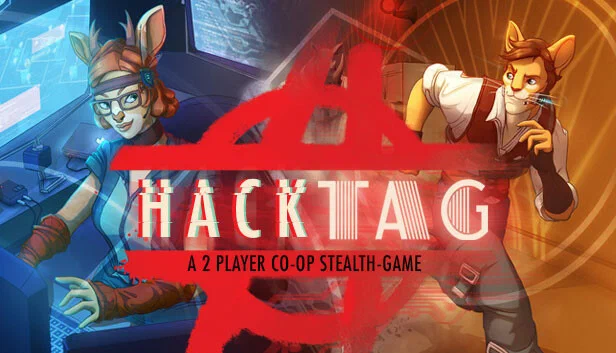
Hacktag is a two-player co-op stealth game developed and published by Piece of Cake Studios, released in February 2018. It is built around asymmetric gameplay: one player is the field agent moving physically through the level, the other is the hacker navigating the same building from the network side. The design goal is to make both players feel like the heroes of a heist movie.
My contributions
- Engine, rendering and performance side of the console port (a second developer handled the online layer).
- Migrated the project from Unity 2018 to Unity 2022, four major versions.
- Moved asset packaging over to Asset Bundles.
- Switched the renderer from deferred to forward on a scene with a high light count, and reworked the lighting budget accordingly.
- Handled split-screen on console, Nintendo Switch in particular, where the rendering load doubles on the weakest target hardware.
Why it was interesting
Not every port ships. On this one the number of platform-specific cases outgrew the schedule, and the console build was shelved.
The interesting part is what a forward renderer does to a scene that was authored for a deferred one. Deferred absorbs a large number of lights almost for free; forward does not. I tried GPU light instancing through a compute shader, and the light volumes started showing up in screen space on some scenes, with inconsistent culling. Going further would have been tech art work, which is not my discipline. The answer that actually shipped was duller and correct: fewer lights, larger, tuned to keep the look, plus dynamic resolution. Split-screen made every one of those budgets twice as tight.